The February Rule
How a pronunciation debate led me to question the old rules I still use in my life.

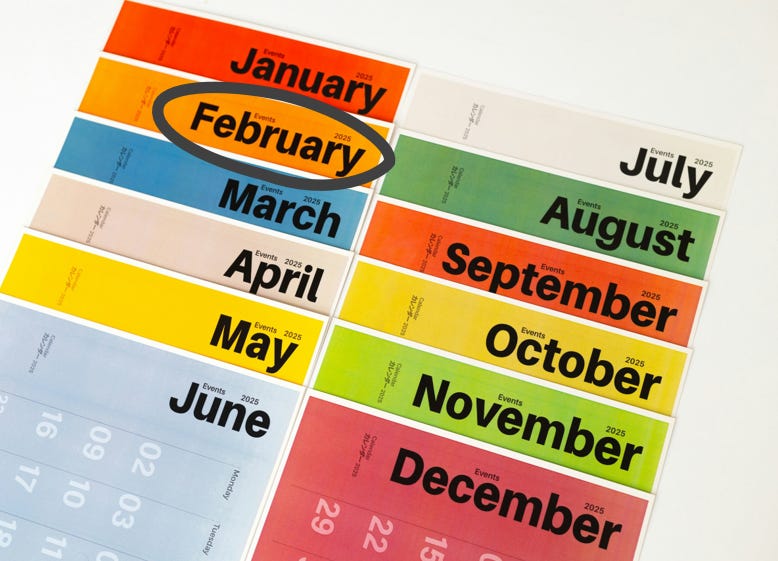
A couple of days ago, I came across a video teaching the months of the year in English. I was horrified when the guy in the video said “FEB-you-air-ee.” He was teaching English. Surely the least the guy could do was pronounce February correctly?
I turned to my husband and asked him how he said it. He said he didn’t know anyone who pronounced the first “r.”
I checked the internet, where I found videos of people saying, “The first ‘r’ is silent, and you add a ‘y’ sound that isn’t there.”
“That’s laziness, not grammar,” I exclaimed out loud.
I reached out to my friend, who is as pedantic about pronunciation as I am. She is my barometer. A vote for the-first-r-is-silent would be a clear sign to change my ways.
Relief. She was on team pronounce-the-r.
I did more Googling, went back to the word's etymology, and lamented the laziness of English speakers that had led society to this terrible travesty.
And then I paused.
Why did this even matter to me?
Then I realised why it mattered. As a child, it had been drummed into me that “FEB-you-air-ee” was incorrect. Any attempt to say it differently was quickly met with a stern correction: “No. It is FEB-roo-air-ee.”
I saw that as a truth, not a preference. We said it that way because that was “the rule.”
As I sat there feeling irrationally annoyed about the pronunciation of February, I started wondering how many other things I still carried around simply because someone had once told me they were right.
Immediately, my mind slipped to work, where I often hide exactly how I am feeling. I keep things close to my chest and don’t share my feelings. I do that because, in a previous role, my manager automatically assumed that me venting or showing my frustration was a sign that I couldn’t cope. In reality, it helped me cope. Yet I'd learned from this manager that other people couldn't see this, and so I often suffered at work because it felt less risky than speaking up.
Somewhere along the way, I'd turned one manager's opinion into a rule I carried from job to job. It was February all over again: I'd absorbed a rule from life without ever questioning whether it was still serving me.
And there were other examples.
I have a tendency to sit back and let other people choose things, whether it's a lunch venue, a holiday destination, or which movie to see. Perhaps it comes from learning as a child that we should put other people first. That learning served me when I was a child figuring out how to behave in the world. As an adult, it sometimes means my own needs go unmet.
There are probably dozens of old rules sitting quietly in the corners of my life. Some still serve me. Some don’t. Maybe part of personal growth is occasionally dusting off the rules we’ve carried for decades and asking whether they still belong.
My February rule still belongs. I’ll continue pronouncing the first “r.”
The difference is that I no longer need everyone else to.
I write to understand what it means to be human in a messy, chaotic world. If this piece resonated with you in some way, you’re always welcome to subscribe to The Being Space.
You might also enjoy:
If you’d like to sit with these ideas a little longer, my book What if Life Came with a User Guide is available on Amazon.